 Dec 2, 2025
 Comments
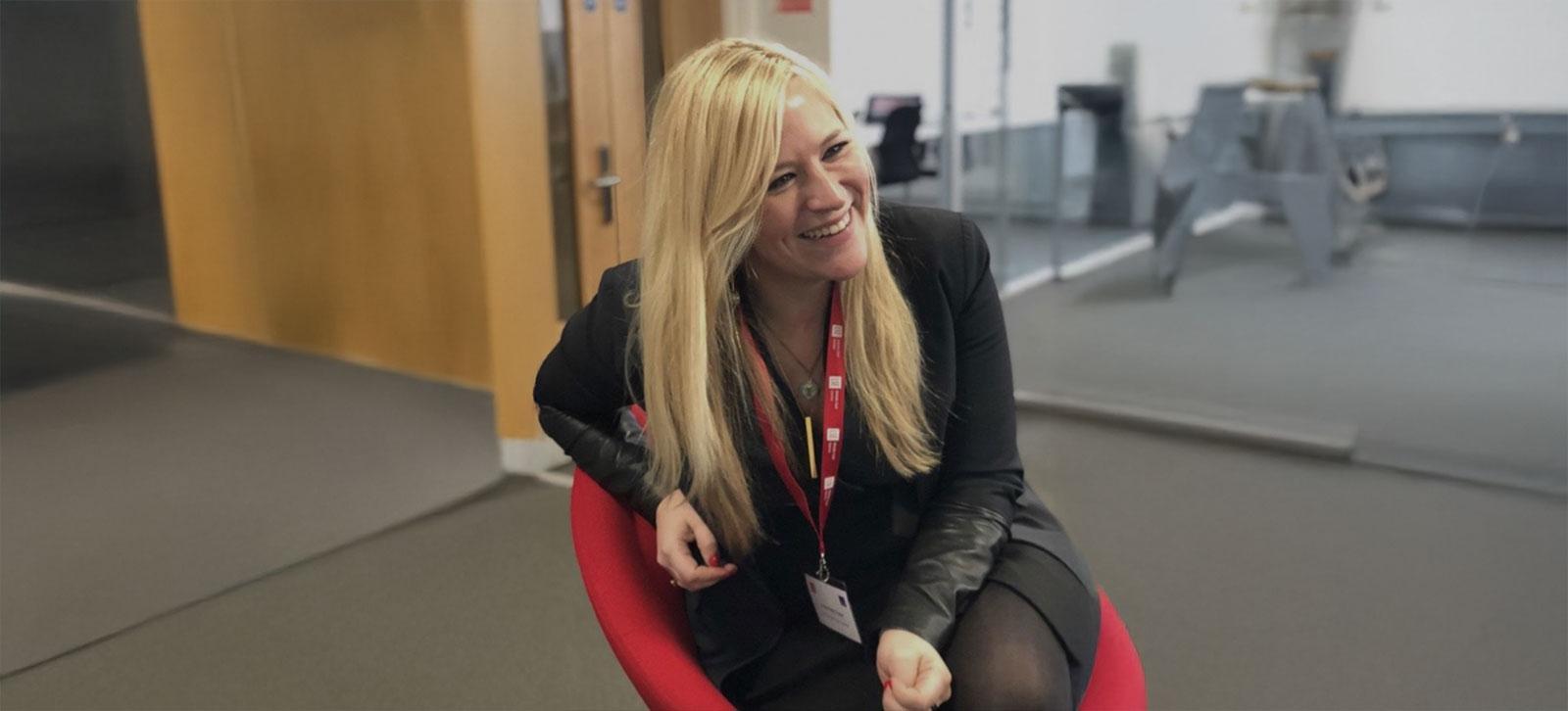
Courtney Freer did not so much choose the Middle East as the region chose her — or at least beckoned with an irresistible puzzle: the enduring role of Islamism, and more specifically, the Muslim Brotherhood, in modern political life. What began as an undergraduate fascination with language and history — Spanish, at first — soon veered eastward when she encountered Islamic history. Like many inquisitive Western students of her generation, she found herself learning Arabic in Cairo and Beirut, gradually piecing together a region too often reduced to oil and headlines.
Her academic journey, however, was never simply about politics or piety. What gripped her most was a less-examined thread: the evolution of nationalism. She saw faint but meaningful echoes between the post-Ottoman emergence of national identities and today’s Gulf societies grappling with their own versions of unity, citizenship, and belonging. These were not static constructs imposed by statecraft, she observed, but evolving concepts shaped by religion, memory, and regional ambition.
I was intrigued — not only by her intellectual curiosity, but by the way she manages to weave together history, belief, politics, and identity. That, ultimately, is what led me to interview her.
A Christian who grew up in the Episcopal Church, Freer brought to her studies a keen awareness of religious pluralism. Islam, in her eyes, is no monolith but a mosaic of interpretations and influences. That curiosity led her to Oxford, where she earned her doctorate between 2012 and 2015, focusing on the Muslim Brotherhood and Gulf politics. Shortly thereafter, she worked with the Kuwait Programme at the London School of Economics, having worked previously at the Brookings Doha Center and the US-Saudi Arabian Business Council.
She has since published several works that explore these themes in depth, including Rentier Islamism: The Influence of the Muslim Brotherhood in Gulf Monarchies (Oxford University Press, 2018) and The Resilience of Parliamentary Politics in Kuwait (Oxford University Press, 2023). Her co-authored volume Tribalism and Political Power in the Gulf(IB Tauris, 2021) delves further into the intersection of kinship and governance in the region.
Since 2021, she has been back in the United States, now based at Emory University, where she lectures on Gulf politics, Islamism, and Middle Eastern political thought. Her students, increasingly aware of the shifting — and sometimes stubborn — dynamics of American foreign policy in the Gulf, are encouraged to approach the region with fresh eyes. Freer, for her part, helps them see that the Gulf is not merely a stage for oil, conflict, or reform, but a place where history lingers and nationalism is still, intriguingly, in the making.
Q:What are you currently working on, and how has your research focus evolved over the years?
A: Right now, I am working on a new book focused more on Islamism as a concept and using the Gulf states as a means of understanding the very notion of political Islam. In the past, most studies of groups like the Muslim Brotherhood have, understandably, focused on the place where it originated — Egypt — but in recent years I have become increasingly interested in bringing the Gulf into broader political science conversations surrounding Islamism. In my view, the Gulf states are often seen as exceptional from the rest of the Middle East and therefore tend to be considered separately from other states. But why shouldn’t the same ideologies that have influenced political action outside of the Gulf not influence oil-wealthy states, too? This is something I am very interested in, and broadening out this conversation also raises interesting questions about how any religion interacts with politics across a range of different political, social, and economic settings.
Q:What first drew you to the Gulf, and why did it stand out from the rest of the region?
A: When I was in grad school, we touched on the Gulf very briefly — the discussion revolved around rentier state theory, which posits that the existence of oil rents dictates not only the way a country’s economy is organized, but also the way that politics and society look. I thought this just seemed too simple and wondered why some of the other topics we looked at in other parts of the Middle East (e.g., contentious politics, Islamism) were not covered in the Gulf, at least in my coursework. It seemed to me a place where there was more to learn, and I found a great deal of information that had not been translated from Arabic. Now, about 15 years later, the field of Gulf studies has grown tremendously, particularly with lots of scholars from the region, so I think students now are learning about the Gulf more beyond rentier state theory.
Q:You’ve written about Islamism and the Muslim Brotherhood — what are the biggest misconceptions people still have about them?
A: I think one major misconception is that the Muslim Brotherhood worldwide is a monolith, that all members make decisions jointly regardless of where they are based. In my research, I have seen that, while social ties may exist, the groups have over the past decades become nationalized and localized. What is important to the Kuwaiti Muslim Brotherhood, for instance, is often not the same as what the Moroccan Muslim Brotherhood may want, and these national divergences reflect the importance of political context in shaping all political groups, Islamist or secular.
Q:How do ideas of nationalism in the Gulf today compare with those in the post-Ottoman period you’ve studied?
A: One thing I’ve noticed, and indeed many Gulf scholars have also noted, is the ways in which Gulf states have become increasingly visible on the global stage. Many consider this a part of nation-state branding, but it can also be seen at least in some respects as an extension of foreign policy. And I think we are seeing how important soft power is with Gulf states becoming increasingly visible in, for instance, global sports.
Q:What role does religion still play in shaping political life in Gulf societies?
A: Politically, I would say that religion is still important in shaping some religious political groups and in influencing some discourse surrounding social policies, particularly those often seen as being too secular or Western.
Q:What challenges do you face when teaching Gulf politics in an American classroom?
A: The biggest challenge is distance — I wish we could take a field trip! Beyond that, though, I think many Americans consider the Gulf only insofar as it is involved in conversations about security and economics, rather than when it comes to the domestic politics and societies of these states.
Q:What do you think outsiders still get wrong about the Gulf?
A: I think outsiders still fall into the trap of economic determinism linked to rentier state theory, and I would say that just because a country gains most of its wealth a certain way does not mean that its politics and society will be ordered in a specific way. Another big misconception, in my view, among many people who haven’t visited the Gulf is that it is one monolith, that the states of the GCC are much more similar than they are; there are of course a variety of differences among these states that are worthy of our attention and our study.
Q: How do Americans — and American policymakers — tend to view Saudi Arabia today?
A: Today I think Americans tend to view Saudi Arabia as a place that is changing rapidly and therefore is the subject of a lot of discussion and curiosity. For instance, many of my students know about some of the megaprojects like NEOM and find developments like this fascinating; they also talk about LIV Golf and Ronaldo playing in Saudi Arabia, so the country is involved in conversations beyond just politics or economics. Traditionally, the American view of Saudi Arabia has been focused on either counterterrorism and security efforts, or on oil, and I believe now that Americans are more curious about Saudi culture and even potentially visiting Saudi Arabia given all of the developments, particularly in the sporting world, which have taken place there.






 Oct 21, 2026
0 Comments
No comments yet. Be the first to comment!