 Aug 7, 2025
 Comments
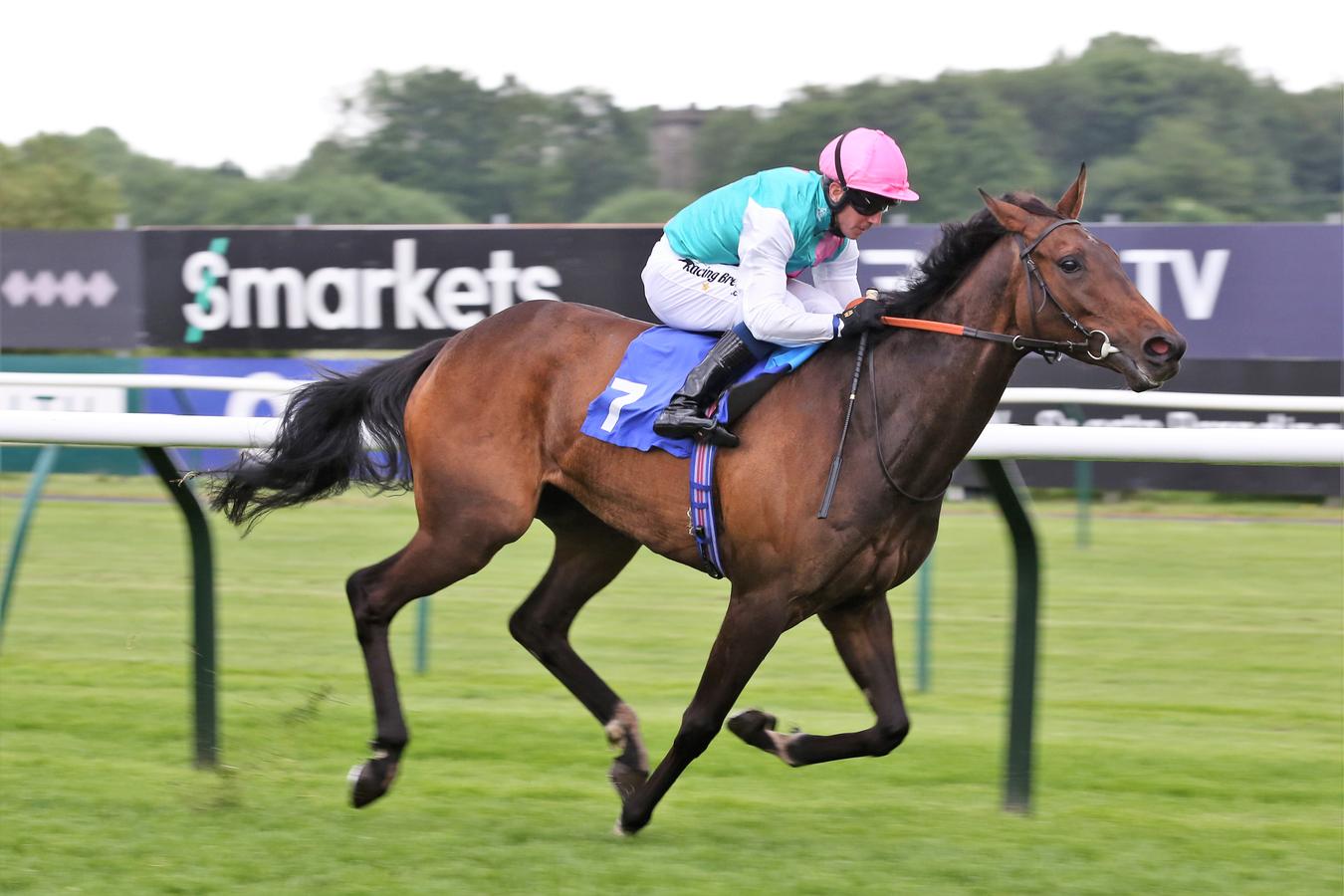
While Saudi Arabia’s investments in football, Formula 1, and global sports such as golf are reshaping the headlines, there’s another Saudi story worth telling, one built far from the spotlight.
Juddmonte, the horse breeding operation founded by Prince Khalid bin Abdullah in the 1970s, has quietly shaped modern racing history. For many Saudis, the approach will feel familiar: modest beginnings, long-term thinking, and a preference for results over attention. In an era of fast moves and big headlines, this is a reminder of the power of quiet excellence.
So as Saudi Arabia pours billions into football, luring global stars and redrawing the sport’s financial map, it’s actually thoroughbred racing where a Saudi operation is rivalling the sporting record of any Premier League club.
Yet Juddmonte did not rely on stadium lights or celebrity endorsements to become one of the world’s most respected names in horse breeding. Its equine stars - Frankel, Enable, Arrogate - have dominated the world’s finest racecourses, from Ascot to Longchamp. But unlike the Gulf’s more conspicuous sporting investments, Juddmonte’s influence has been quiet, generational—and enduring.
In a sport defined by bloodlines, few names carry as much weight. But Juddmonte is more readily associated with its studs in Newmarket, England, and Kentucky, USA. Few associate it with a reserved Saudi prince who built one of the most formidable breeding operations in modern history - without seeking the spotlight.
Prince Khalid bin Abdullah bin Abdulrahman, a nephew of King Abdulaziz, began his racing venture with modest purchases in England in 1977. Just three years later, Known Fact became the first Arab-owned horse to win a classic British race, the 2000 Guineas. By the mid-1980s, he had acquired stud farms across England, Ireland and Kentucky. Today, Juddmonte has bred over 100 Group 1 winners and manages a stable of around 800 horses.
But the operation has never been about scale alone. Juddmonte succeeded not by buying champions, but by building bloodlines, an approach at odds with the Gulf’s louder forays into sport. According to Teddy Grimthorpe, Juddmonte’s former racing manager, Prince Khalid “didn’t just buy winners. He built a system—rooted in breeding expertise, long-term thinking and an obsessive attention to detail.”
The jewel of that system is Frankel, the undefeated stallion born in 2008. He raced 14 times and never lost, often dispatching top-class rivals with what observers called “contemptuous ease.” Timeform, the performance rating agency, gave him a score of 147, the highest in its history, tied only with Sea Bird in the 1960s.
Frankel’s excellence was no fluke. His dam, granddam and great-granddam were all bred by Juddmonte—a maternal line developed over decades. Since retiring in 2012, he has sired more than 30 Group 1 winners, and his offspring regularly fetch seven-figure sums at auction.
If Frankel ruled the turf, Enable was its reigning queen. Bred by Juddmonte and trained by John Gosden, she won 15 of her 19 races, often against male competitors, across Britain, France, Ireland and the United States. She twice claimed the Prix de l’Arc de Triomphe and won the King George VI and Queen Elizabeth Stakes three times. Like Frankel, she came from a Juddmonte-developed female line.
Juddmonte’s approach contrasts sharply with the region’s more recent, high-profile investments in global sport. Where others pursue visibility through sponsorships and acquisitions, Juddmonte has achieved influence through precision and patience.
That restraint is not merely personal. It reflects a broader tendency within Saudi society - particularly among the older generation of royals and business leaders - to view public recognition with caution. In a culture that has historically prized dignity over display, Juddmonte stands as a legacy of how Saudis have often pursued excellence not with fanfare, but through quiet, methodical work. It is a style of leadership that shaped many parts of Saudi Arabia before the recent shift toward global visibility and brand-driven influence.
Marcus Armytage, racing correspondent at The Telegraph, noted that “Prince Khalid’s impact on the sport was immense, but entirely unflashy. He let the horses speak for themselves—and they shouted.”
In 2007, Prince Khalid became the first Arab admitted to the English Jockey Club, an institution that dates back to the 18th century. His death in 2021 was met with tributes from Newmarket to Lexington. Juddmonte remains in family hands, and Frankel’s stud fee - reportedly over £350,000 - places him among the world’s most valuable stallions.
Such success also echoes deeper and more satisfying historical ties. The modern thoroughbred traces its lineage to three Arabian stallions imported to England in the 17th and 18th centuries. One, the Darley Arabian, was acquired in 1702 by a British consul in Aleppo from a sheikh of the Anaizah tribe - a distant ancestor of today’s elite racehorses.
In that sense, Juddmonte’s rise is not merely a story of success, but of return. A reminder that the roots of modern horse racing were, quite literally, Arabian.







 Oct 21, 2026

0 Comments
No comments yet. Be the first to comment!