 Oct 30, 2025
 Comments
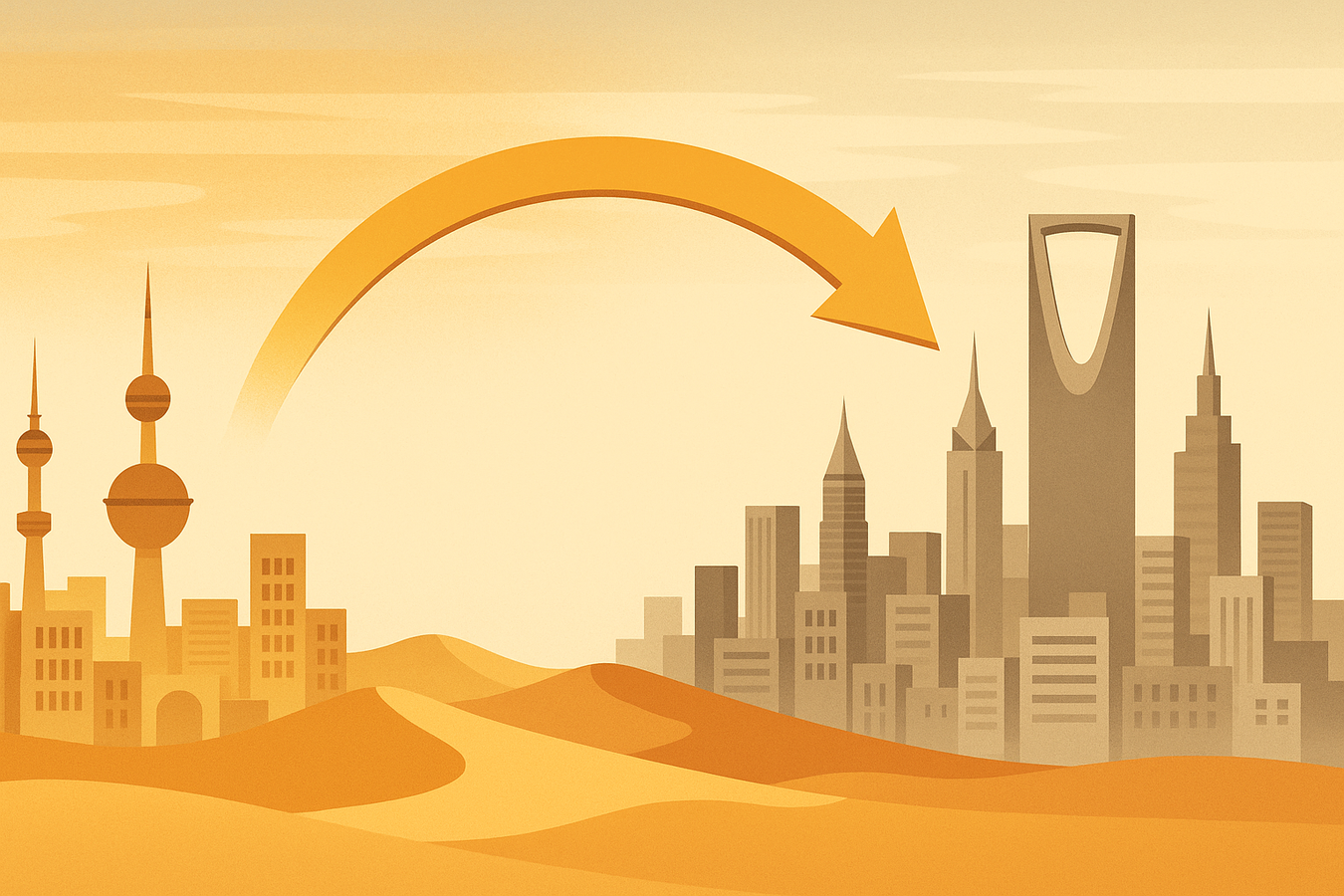
Across the Gulf, familiar stories are taking new turns. Kuwait, once the region’s cultural and intellectual compass, is now entering a phase Saudi Arabia knows well — modernising its bureaucracy, diversifying its economy, and redefining what progress looks like. For Saudis, watching Kuwait’s quiet transformation feels both new and faintly nostalgic: a reminder of how swiftly ambition can shift from vision to daily reality.
When I read a recent article on Kuwait’s quiet but determined administrative reforms —digital platforms, streamlined licensing, and a push to diversify beyond oil—it struck a familiar chord. The tone reminded me of Saudi Arabia in the early 2000s, when a sudden drop in oil prices forced us to turn long-discussed reforms into reality. But it also brought back older memories—of how Saudis once saw Kuwait, and how those perceptions have shifted over time.
In the 1980s, Kuwait was the Gulf’s cultural and social pacesetter. Its television dramas, theatre productions and glossy magazines—Al Arabi among them—were widely consumed in Saudi households, shaping an image of a small but sophisticated neighbour. To marry a Kuwaiti was, in certain circles, considered a social coup. Kuwait’s parliamentary politics and outspoken press contrasted sharply with Saudi Arabia’s quieter public sphere, reinforcing the perception that Kuwait was the more “modern” society. The influence extended beyond culture to intellectual life: many in the Gulf followed the sharp political commentary of Abdullah Al-Nafisi, and today, voices like historian Badr Al-Saif continue that tradition of informed, articulate public discourse.
When I finally visited Kuwait for the first time in 2024, decades after those impressions were formed, I expected to see a country that had carried its head start forward. Instead, I found something closer to Saudi Arabia in the late 1980s. Much of the cityscape—the iconic television tower, the streets I remembered from Kuwaiti serials—had aged without significant renewal. There was beauty in places: the elegance of its malls, the refinement of personal style, the quality of products on display. Yet the sense of urban modernity I had imagined simply was not there.
Conversations with Kuwaitis, however, revealed something less tangible but deeply present: a reservoir of knowledge and cultural awareness. Interviews with several Kuwaiti women left me impressed by their grasp of history, literature and regional affairs. This intellectual confidence, visible in the country’s arts, media and academic life, remains one of Kuwait’s quiet strengths—an inheritance from the decades when its cultural exports shaped much of the Gulf’s imagination.
Kuwait’s current administrative reforms evoke Saudi Arabia in the early 2000s, when the drop in oil prices below $10 a barrel turned long-standing talk of diversification into necessity. In Saudi Arabia, economic reform gradually made space for social change, including acceptance of jobs once dismissed as unsuitable—just as other Gulf states have had to recalibrate their own labour markets and social norms. Oman introduced taxation, Qatar invested in infrastructure and finance, while the UAE—especially Dubai—built its identity on trade and tourism from the outset.
The pattern is clear: across the Gulf, societies that once relied on oil wealth are learning to adjust to a more practical, diversified reality. For Kuwait, as for its neighbours before it, the test will be whether administrative efficiency can spark a broader renewal—not only in the economy, but in the public life and opportunities that shape how a society sees itself.







 Oct 21, 2026
0 Comments
No comments yet. Be the first to comment!