 Oct 28, 2025
 Comments
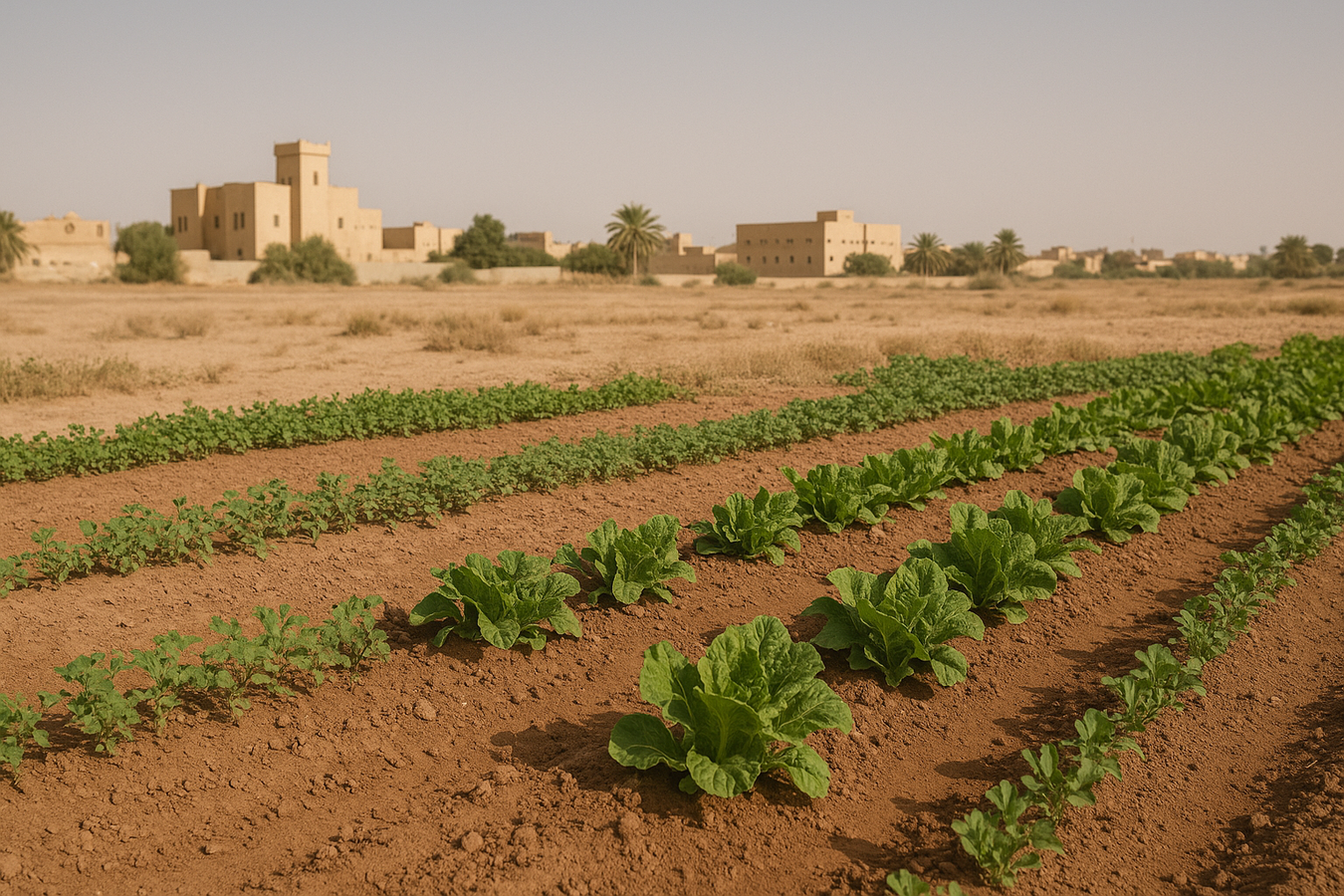
I recently came across a detailed article about food imports across the Arab region and their strategic implications. It was a sharp reminder that food and water security—often discussed in geopolitical terms—are also deeply personal concerns, especially in Saudi Arabia.
And that is not something new. Long before today’s policy strategies and megaprojects, Saudis have lived with the knowledge that water is scarce, that farming is limited, and that food, for the most part, comes from beyond their borders. These aren’t abstract issues for ministries and experts alone. They affect family routines, monthly budgets, and even the way most children should come to see their own future.
As Saudi society continues to modernize and diversify, this quiet shift from comfort to awerness is shaping the way people think about sustainability and responsibility. Saudi Arabia has long relied on its wealth to ensure stable access to food and clean water. But that stability comes at a cost. Over 80 percent of food is imported, and water largely depends on energy-intensive desalination.
With global supply chains increasingly fragile—from pandemic disruptions to regional conflicts—more and more Saudis are recognizing how vulnerable abundance can be. What they are experiencing now is not the beginning of concern, but the next phase of a long-standing awareness. Generations of Saudis remember the water trucks, the rationing, the unpredictability in summer days. The current focus is less a new problem than a modern continuation of an old challenge.
The government has been proactive investing in technology, agricultural innovation, and public education. But the shift must also be cultural. Many young Saudis raised in urban settings may never have seen a farm or thought about how much water is needed to grow a single date. Yet rising temperatures, shrinking aquifers, and population pressures make conservation not just advisable—but essential. The urgency may be newer, but the mindset of survival has deep roots.
Education plays a critical role. Today’s schoolbooks go beyond theory, offering real-world examples of sustainability in action—in newly introduced subjects covering water-efficient farming and waste reduction. These subjects have been discussed before, but more interactive learning methods are helping students understand not just the science, but the responsibility. This isn’t entirely new—environmental themes have been present in curricula for decades—but the implementation now feels more real, more visible, and more in tune with daily life.
Community engagement also matters. Just as in the past, local campaigns and religious messages can reinforce social change in ways that lectures cannot. Today’s awareness campaigns appear across media—from lighthearted social videos explaining water bills to serious calls for agricultural self-sufficiency. Mosques, influencers, and neighborhood initiatives alike are helping normalize water-saving habits and reduce food waste, using both tradition and technology to reach citizens of all backgrounds.
Perhaps the most encouraging sign is the role of young Saudis. Across the country, a new generation is approaching agriculture not as a fallback but as a frontier. From hydroponics and rooftop greenhouses to heirloom seeds and desert markets, local farming in Saudi Arabia is being reimagined as a modern, forward-looking solution—part of an economy where entrepreneurship is the future.
If food and water are the foundation of national security then every Saudi household has a role to play. The concerns of the Saudi government are spreading widely across society—to understand, raise awareness, and encourage participation. Every shortened shower, every locally grown meal, every young farmer testing new soil adds to collective preparedness.
The state can build systems, but the spirit of sustainability must take hold in everyday life. That begins not with sweeping declarations, but with small, intentional acts—by ordinary people, in homes and communities, who understand that the abundance enjoyed today must not be taken for granted.








 Oct 21, 2026

0 Comments
No comments yet. Be the first to comment!