 Sep 9, 2025
 Comments

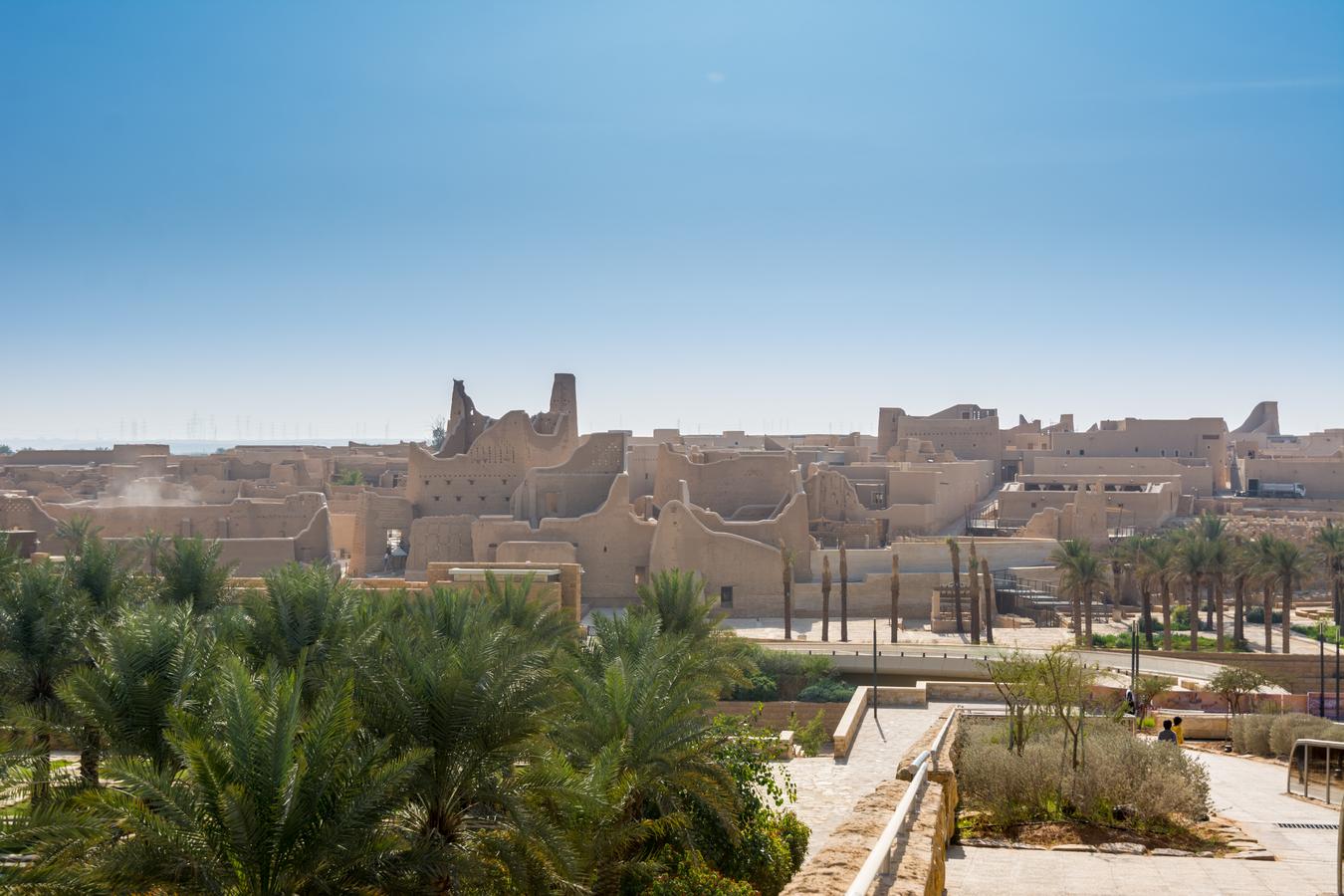
When Sotheby’s held its first auction in Riyadh this February, I could not help but think how far the idea of an auction has travelled in Saudi life. For most of us, the word once meant camels, dates, or cars—practical transactions carried out in open lots after Friday prayers. Suddenly, it now also means paintings and sculptures selling for millions under the lights of Diriyah. What was once about trade and necessity has begun to touch on culture, taste, and recognition. And just as people used to gather at the camel market not only to buy but to argue, joke, and watch, today’s art sales are starting to create their own form of social gathering.
For a long time, I assumed auctions were haram. In my mind, they looked too much like betting: people raising the stakes, competing until someone gave in, money changing hands as if it were a game of chance. That image seemed dangerously close to maysir—gambling—which Islam clearly forbids. It was only later that I discovered auctions (muzayada) are not only permissible in Islam but part of its early practice. The Prophet Muhammad (pbuh) himself approved open bidding, provided it was fair and transparent. Classical scholars rote about auctions in detail, emphasizing that the goods must be clearly described and that bidding should avoid deception or collusion. The difference is simple: gambling rests on chance, while an auction reflects value determined in public.
In Saudi Arabia, this practice has long been part of ordinary life, even if we do not always think of it that way. Anyone who has walked through a camel market will recognize the rhythm: the auctioneer’s voice rising above the crowd, hands shooting up in quick succession, the sharp call that signals the winning bid. In places like Buraydah, one of Saudi Arabia’s largest livestock markets, thousands of animals are sold each year in this fashion. Similar scenes play out at date auctions in Al-Qassim, where entire harvests change hands in front of neighbors and traders, or at used car auctions that often unfold in open lots after Friday prayers. Those who describe these gatherings say they are as much about the spectacle and the social interaction as they are about trade itself. People linger, argue, and joke, even if they never raise a hand to bid. Auctions, in this sense, were always part of our social fabric—straightforward, transparent, and communal.
What they did not carry was prestige. These auctions dealt in livestock produce, or second-hand goods, not cultural capital. Art was absent from the picture. For much of the 20th century, art in Saudi Arabia remained confined to private salons or was shown abroad. Collectors quietly acquired works, but the idea of selling a painting or sculpture under the hammer at home was almost unthinkable.
Elsewhere in the Gulf, the story was different. Dubai positioned itself early as a regional auction hub. Christie’s held its first sale there in 2006, followed by Bonhams in 2008 and Sotheby’s in 2017. By 2022, Christie’s Dubai auctions alone had generated more than $600 million in sales, according to company figures, cementing the UAE as the Gulf’s platform for modern and contemporary Middle Eastern art. Qatar, too, became a major player, though more through state-backed acquisitions than public auctions. The Qatar Museums Authority is estimated to have spent over $1 billion building its collection, buying works from Picasso to Damien Hirst, and in doing so positioned Doha as a powerhouse buyer on the international stage. For years, Saudi Arabia stayed on the sidelines, its collectors active abroad but its own auction culture limited to camels, dates, and cars.
That changed in February 2025, when Sotheby’s opened an outpost in Riyadh. Compared with Dubai’s long-established scene, it is a small step, but a symbolic one. It signals that Saudi Arabia is no longer just a source of wealthy buyers traveling abroad but a marketplace in its own right. A Saudi painting can now be sold in Riyadh and instantly enter the same global circuit as works in London or New York. For artists, this offers visibility—their work is not just admired in galleries but priced in an open market. For collectors, it offers something more intimate: a sense of belonging. As one young Saudi collector put it to me, “Buying in London made me feel like a tourist. Buying in Riyadh makes me feel like part of something.”
Auctions inevitably change the meaning of art. In a gallery, a painting is admired quietly. In an auction room, it is validated through price. That validation carries particular weight in a society where prestige has always mattered. A successful bid is not just ownership; it is recognition. Yet the risks are obvious. When art is treated as a commodity, speculation can overshadow creativity. In Dubai, some collectors complained of “flipping”—buying at auction only to resell quickly at a profit. Critics say this distorts the market, rewarding safe, bankable names while experimental voices struggle. Saudi Arabia will face the same test: whether its auctions encourage genuine patronage or fuel speculative prestige.
Islamic tradition offers a guide. The Prophet’s (pbuh) acceptance of auctions rested on fairness: no deception, no collusion, and clear value. Applied today, that means transparency in pricing, access for both established and emerging artists, and safeguards against manipulation. By these standards, Saudi Arabia’s auction market is still in its infancy. Sotheby’s Riyadh is more of an outpost than a headquarters, and many Saudi collectors still look to Dubai or London for major sales. Yet momentum is undeniable. Saudi Arabia is home to some of the region’s wealthiest collectors, and institutions such as the Diriyah Biennale and the Royal Institute of Traditional Arts are building a cultural ecosystem that makes auctions more than a novelty. According to a 2023 ArtTactic report, Middle Eastern art sales through international houses grew by 24% in just five years, with Saudi buyers playing an outsized role. Bringing that activity home is the logical next step.
From the camel market to Sotheby’s Riyadh, auctions in Saudi Arabia have travelled a long way. They began as practical gatherings, rooted in trade and necessity. Today, they are instruments of cultural diplomacy and economic signaling. For Saudis like myself, the journey is also personal. What I once mistook for betting was, in fact, part of our tradition all along—and now it is reshaping how Saudi Arabia values not just goods, but creativity itself. The question is whether Saudi Arabia’s new auction world will remain faithful to those roots of openness and fairness, or whether it will be curated into a polished global showroom. Either way, the gavel has already fallen, and the bidding has begun.






 Oct 21, 2026
0 Comments
No comments yet. Be the first to comment!