 Jan 28, 2026
 Comments
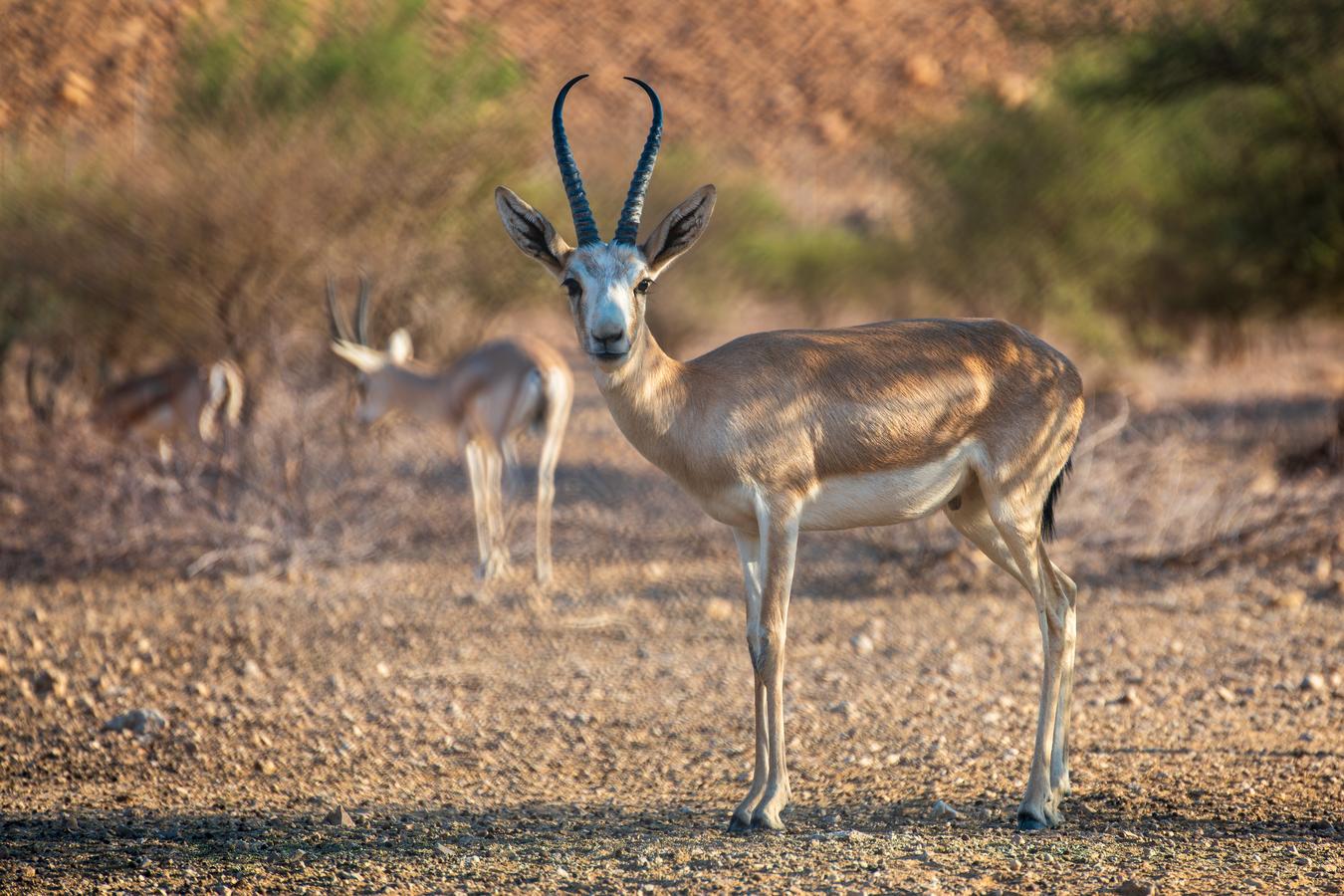
Saudi Arabia’s deserts are often imagined as empty expanses of sand and heat. In reality, they are home to a resilient and surprisingly diverse range of animals native to Saudi Arabia, shaped by centuries of adaptation to one of the world’s harshest environments. From iconic mammals to migratory birds and nocturnal reptiles, Saudi desert animals reveal as much about the land as they do about the culture that grew around it.
What Are the Most Iconic Desert Animals in Saudi Arabia?
Few species are as closely associated with Saudi Arabia as the Arabian oryx. Once extinct in the wild, the oryx has returned through sustained conservation efforts, becoming both an ecological success story and a national symbol. Its white coat reflects the sun; its endurance mirrors the desert itself.
Sharing this landscape are sand gazelles, Nubian ibex, and the elusive Arabian wolf, all adapted to scarce water, extreme temperatures, and vast distances. These animals are rarely seen, but their presence underpins the desert’s fragile balance.
No discussion of wildlife in Saudi Arabia would be complete without the camel. Often called the “ship of the desert,” camels were once indispensable to trade, travel, and survival. Today, they remain culturally central, celebrated in racing, festivals, and even beauty contests, less as relics of the past than as living symbols of continuity.
What Are the Birds and Reptiles of the Saudi Desert?
The Saudi desert is also a vital corridor for birdlife. Falcons, revered across the Arabian Peninsula, occupy a special place in Saudi culture. Falconry, recognized as intangible cultural heritage, continues to be practiced and passed down through generations.
Each winter, migratory birds from Africa and Central Asia pass through Saudi Arabia, resting in desert oases and coastal wetlands. Their arrival briefly transforms the landscape, reminding observers that the desert is connected, not isolated.
Reptiles, meanwhile, are among the desert’s most efficient survivors. The spiny-tailed lizard (dhub) is a familiar sight in rocky areas, while snakes and vipers remain largely nocturnal, conserving energy and water. These species illustrate adaptation at its most precise.
Why Does Saudi Arabia’s Desert Wildlife Matter?
The animals of Saudi Arabia’s desert are not merely biological curiosities. They reflect a broader truth about the country itself: resilience shaped by environment. As Saudi Arabia modernizes, growing attention is being paid to conservation through protected areas, breeding programs, and royal reserves.
These efforts are not only about preserving rare species. They represent a renewed recognition that the desert, long treated as something to overcome, is also something to understand. In that sense, Saudi Arabian desert wildlife offers a quieter narrative of the country, one defined less by speed than by survival, balance, and respect for limits.










 Oct 21, 2026


0 Comments
No comments yet. Be the first to comment!