 Aug 8, 2025
 Comments
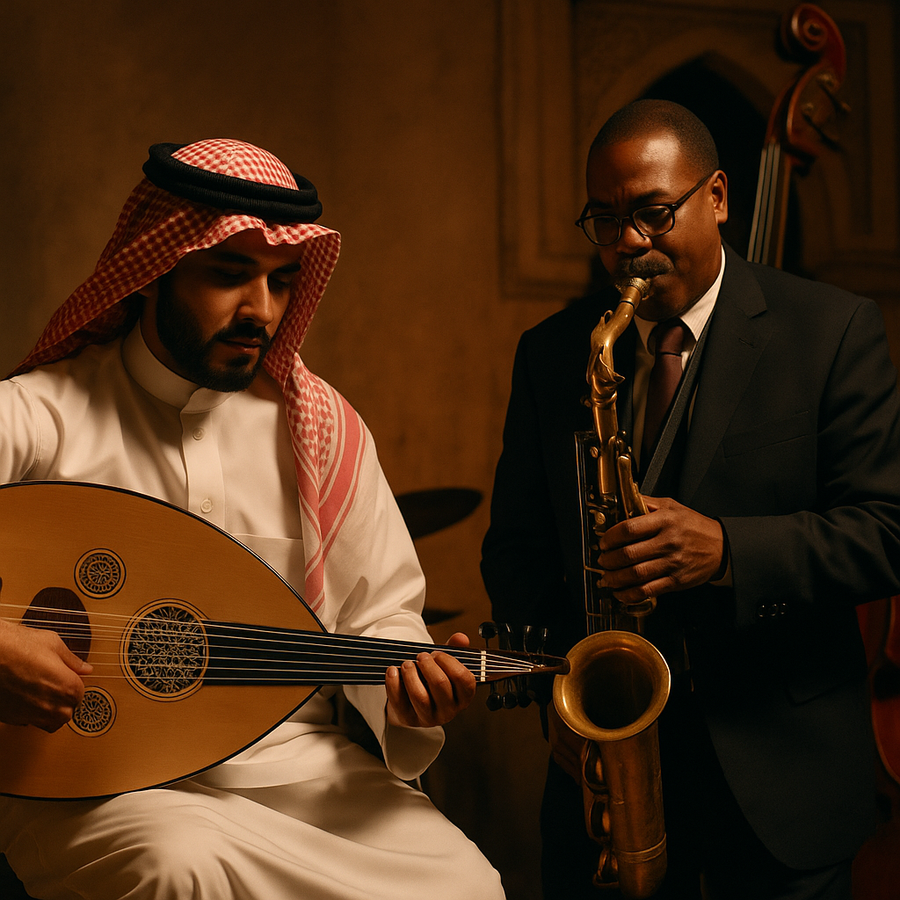
The sound of jazz drifting through a Saudi venue is still unusual enough to make people pause. When the voice carrying it belongs to a Saudi woman, the moment feels even more distinct. Across Saudi Arabia, a small but growing number of female singers are stepping into public spaces once closed to them, bringing with them not only new genres but new ways of presenting Saudi culture.
Loulwa Al-Sharif, featured in a recent episode of The Mayman Show, is one of them. Her journey began at family gatherings in Jeddah and has led to public performances where she blends Arabic melodies with jazz and blues—a sound that feels both rooted and global. Speaking on the programme, she recalled how a single blues song sparked her passion and opened the door to a style that bridges cultures.
For decades, women’s singing in Saudi Arabia was mostly confined to private settings such as weddings and family events. Now, more performers are stepping onto public stages, supported by expanding cultural venues and a society gradually more accustomed to female voices in open spaces.
What makes the change notable is the range of styles. While rap and hip-hop have drawn much attention, the reality is broader. Saudi artists are blending heritage with genres from jazz to contemporary pop, indie-folk, and even opera. Hijazi ornamentation can run over a jazz progression; traditional drum rhythms can accompany modern ballads; classical Arabic phrasing can sit within a Western operatic framework.
Alongside Loulwa’s jazz and blues, Tamtam and Dalia Mubarak lead in pop, Rotana Tarabzouni explores indie-folk, and Sawsan Albahiti, Saudi Arabia’s first professional opera singer, brings Arabic presence to the classical stage. Each is different, yet together they mark a gradual move away from music as a private art toward something to be shared with broader audiences.
A woman’s singing voice remains sensitive for some, shaped by religious or personal beliefs. Yet even those who would not perform themselves often enjoy listening. For expatriates, hearing Arabic music woven into jazz, opera, or other genres is more than entertainment—it is a cultural statement, revealing a Kingdom confident enough to present its heritage in new and varied forms.








 Oct 21, 2026
0 Comments
No comments yet. Be the first to comment!