 Dec 30, 2025
 Comments

Review: Saudi Arabia – Culture Smart!
I discovered Cheryl Obal almost by accident on LinkedIn, in the middle of yet another debate about how to “explain” Saudi culture to outsiders. It has become its own small industry: consultants, writers, and corporate trainers producing frameworks for a society that even Saudis interpret differently among themselves. Some welcome the effort; others reject it, treating any external commentary as trespass. The instinct to defend the country is understandable, but it can also drown out more nuanced discussion.
Obal’s posts stood out because she pays attention to the negotiations of daily life rather than the big political shorthand. Finding out that she authored Saudi Arabia – Culture Smart! confirmed that instinct. The book belongs to a crowded genre and, like any cultural guide, it simplifies. Yet it participates in a broader conversation: outsiders trying to read a fast-changing society, and Saudis becoming more vocal about how they want to be represented.
A Guide That Understands the Surface to Hint at the Depth
Books about Saudi Arabia typically fall into two categories: political analysis written from afar, and glossy travel narratives that avoid the question of how people actually live. Culture Smart! sits between them. It is not an academic study, and it does not pretend to be. Instead, it offers what many newcomers quietly want: instructions for avoiding avoidable mistakes.
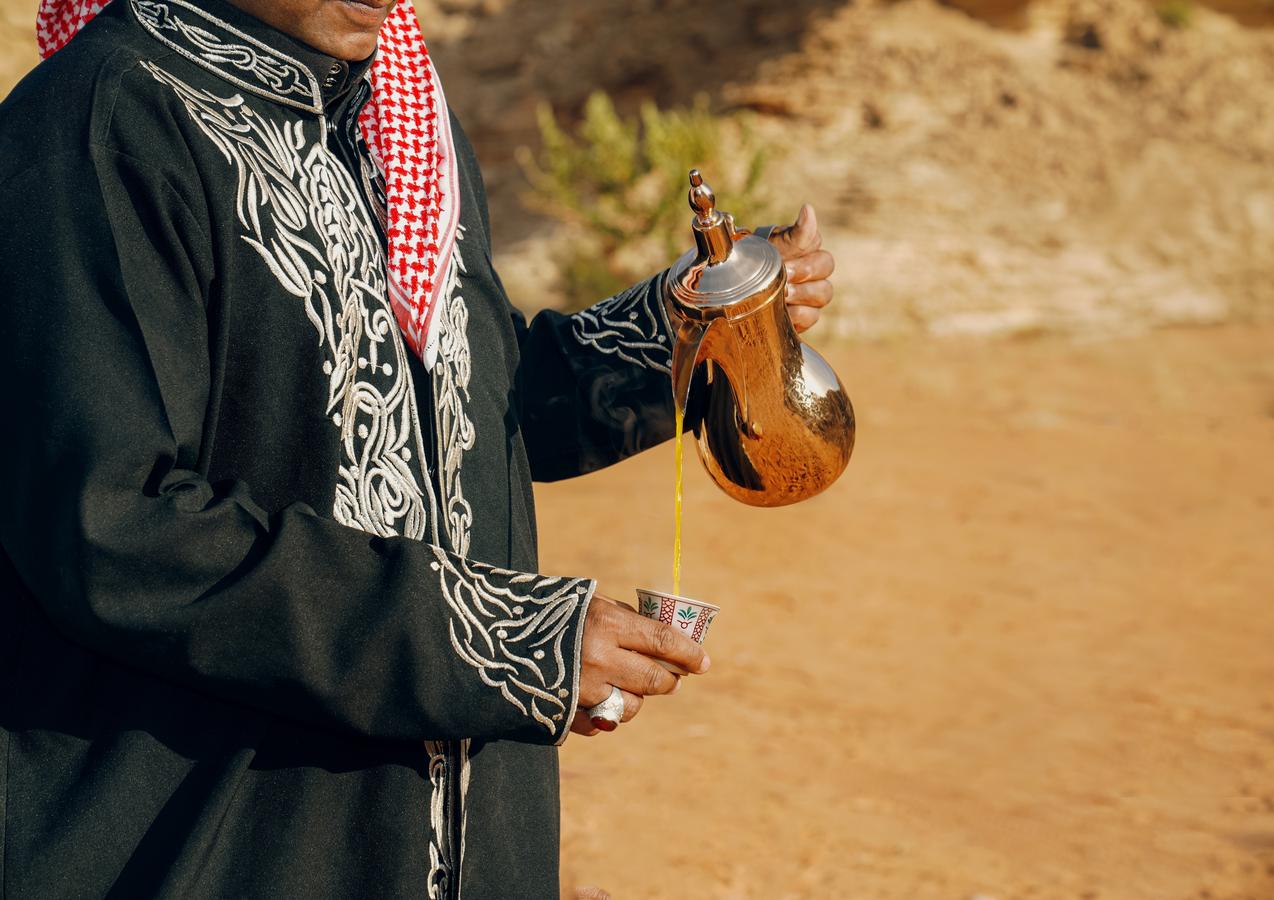
Its premise is straightforward. The book attempts to explain what shapes Saudi daily life—family, faith, hospitality, hierarchy, privacy and the controlled use of time. The focus is not ministries or mega-projects, even if Vision 2030 is mentioned. It is handshakes, invitations, coffee etiquette and conversational tact. These may sound trivial, but for someone newly arrived, they are the difference between building trust and accidentally causing offence.
The book is at its strongest when it connects outward behaviour to inner logic: why a direct “no” is often cushioned, why privacy is defended so fiercely, and why hospitality is not a performance but a moral infrastructure. It handles family life with similar care. It acknowledges negotiation rather than obedience, and it recognises generational difference without turning Saudi youth into symbols.
Crucially, it accepts that the country has changed. Mixed workplaces, cafés, women driving, concerts and tourism are treated not as novelties but as normalities. That makes it more current than several titles still found on foreign bookshelves.
Limits: A Visitor’s View, Not a Citizen’s View
The book’s strengths mirror its limitations. It is written for someone arriving at an airport, not someone raised in a Saudi neighbourhood. The questions it answers—What should I wear? How should I greet? How formal are meetings?—are practical and legitimate, but they only reach the surface.
Regional differences are present only as shadows. A reader will not understand why social expectations in Jeddah feel different to Buraydah, or how class, tribal affiliation or foreign education quietly influence interaction. The more sensitive themes—inequality, conformity, the gap between public language and private behaviour—are acknowledged only briefly. That may be intentional. A polite guide cannot do the work of a sociological study.
Still, for its intended audience, it is enough. It is a guide for guests, not a map of the entire country.
Reading It as a Saudi
From a Saudi perspective, the book is both recognisable and oddly formal. Much of what it describes is true: the sanctity of coffee rituals, the interruption of a meeting when family calls, the elastic relationship with time that outsiders misread as disorganisation. But daily life, when written down for foreigners, suddenly looks stiffer than it feels.
There are places where diplomacy smooths reality; humour and contradiction are tidied away. The private ease between friends, the mix of conservative vocabulary and modern lifestyles, the speed at which norms evolve—all appear, but in outline. That is the cost of translating a coded culture into plain English.
Yet the act is useful. Saudis rarely see their own habits described back to them with structure. In that sense, the book is a mirror—held up by a foreign hand, with all the distortions that implies, but a mirror nonetheless.
Verdict
Saudi Arabia – Culture Smart! does not claim to be definitive, and it isn’t. It will not satisfy those looking for political analysis or ethnographic depth. It will not reflect the full range of Saudi experience—from the mountains of Asir to the compounds of Dhahran.
Judged on its own terms, however, it succeeds. It prepares outsiders to enter the social landscape without stumbling at every threshold. It offers a framework for listening before speaking. And it acknowledges Saudi culture not as a museum piece, but as a living system under negotiation.
In a world still comfortable with clichés about the Kingdom, that alone earns it a place on the reading list.










 Oct 21, 2026

0 Comments
No comments yet. Be the first to comment!