 Sep 8, 2026
 Comments
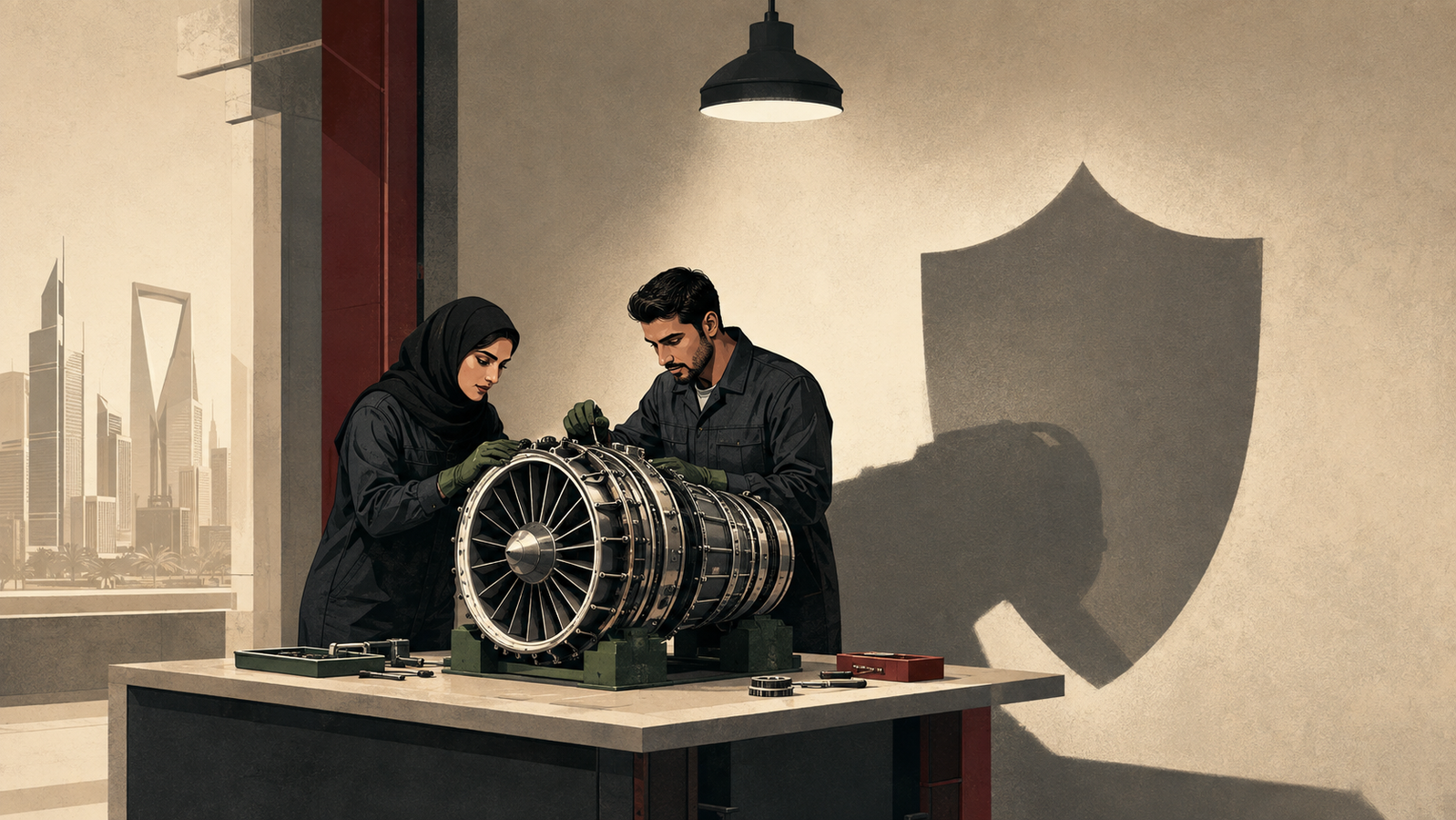
The war involving Iran, Israel and the United States has felt uncomfortably close in Saudi Arabia since February 28th.
The effects were immediate in the Kingdom. Conversations that once centred on work, family plans and the next holiday began to include cancelled flights, travel warnings, savings and an uncertain future. People checked on relatives abroad, reconsidered journeys and wondered what a longer conflict might mean for their daily lives.
And, of course, there have been confirmed missile and drone attacks on Saudi soil, resulting in casualties. We are not at war, but we feel its presence—not least because it enters society in ways that are not always immediately visible.
It changes how families plan, how businesses invest and how young people think about their futures. It can alter which professions appear secure, which skills are considered valuable and where governments decide that domestic expertise is most urgently needed.
In a recent article for Arab News, Dr Turki Faisal Al-Rasheed examined the political economy of war. His analysis showed how conflict can strain national budgets, disrupt supply chains and slow long-term development. These may sound like institutional concerns, but their consequences eventually reach ordinary households through employment, prices, investment and public services.
For Saudi society, one less obvious consequence may be a new urgency around technical skills. Developing a domestic defence industry was already part of the Kingdom’s long-term economic plans. Regional instability has made the reasons for doing so feel more immediate.
This does not make war an opportunity. Its human and financial costs are too serious for that. But difficult periods can expose capabilities that a country lacks and encourage investment in the people who could develop them.
Saudi Arabia has traditionally obtained much of its advanced defence equipment from international suppliers. That relationship will not disappear. Yet disrupted transport routes, rising global demand and uncertainty about access to equipment and replacement parts demonstrate the risks of depending too heavily on expertise located elsewhere.
The localisation of military expenditure increased from 4% in 2018 to 24.89% by the end of 2024, according to the General Authority for Military Industries. The Kingdom aims to raise it above 50% by 2030.
A Saudi defence industry will require far more than weapons production. It will need engineers, software developers, cybersecurity specialists, researchers, safety professionals, technicians and supply-chain managers, opening new paths for young Saudis deciding which technical courses to study and where to work.
Universities and technical colleges must respond as well. Their courses should reflect the skills that emerging industries genuinely require. Employers should offer apprenticeships, mentoring and credible routes to promotion. Students need to see not only that new jobs exist, but also that these jobs can become respected and sustainable careers.
Some of these foundations are already being built. The National Academy for Military Industries aims to accommodate 2,000 students each year in technical and engineering disciplines. GAMI has also reported that more than 850 private-sector employees have benefited from related education and training programmes.
In 2025, programmes supported by the Human Resources Development Fund contributed to the employment of more than 562,000 citizens. More than two million Saudis benefited from training, guidance and empowerment programmes, backed by spending of over SR8.29bn ($2.21bn).
In a February 2026 statement published by the fund, its director-general, Turki Al-Jawini, said its role was to “align training outputs with the needs of the labour market”. That principle will be essential if defence localisation is to create meaningful careers rather than merely satisfy employment targets. Specialised knowledge cannot be produced quickly: Saudi employees placed in technical positions must receive the education, apprenticeships, practical experience, responsibility and patient mentoring needed to master their roles.
Saudi women should be part of this change, too. Their labour-force participation reached 33.5% in the third quarter of 2024, compared with 22.8% in 2016. The original Vision 2030 target of 30% was achieved early and was subsequently increased to 40%.
The next stage should be measured not only by how many women enter employment, but also by how many progress into technical, operational and leadership positions.
A more recent example comes from Riyadh Air. In December 2025, Nahar AlJahani, its vice-president of talent acquisition and business partners, described the airline’s commitment to “developing national human capital and enabling Saudi youth—both men and women—to access world-class education”. The statement reflects a growing emphasis on giving women access to specialised careers. But opening these professions to women is only the beginning: they must also receive practical experience, institutional support and opportunities to advance.
International specialists and companies will remain important, of course. Localisation should not mean isolation. Foreign expertise can help train Saudi employees, establish new industries and connect domestic businesses to global markets. Successful partnerships, however, should leave knowledge behind.
Smaller Saudi businesses could benefit, too. A growing domestic industry will need local suppliers, maintenance providers, technology companies and specialist services. If managed well, defence spending could support a wider network of Saudi enterprises rather than remain concentrated among a small number of large contractors.
The success of this process, then, should ultimately be judged through people. Are young Saudis acquiring expertise that remains valuable throughout their careers? Are women progressing into technical leadership? Are domestic companies developing their own products and ideas? Are universities preparing graduates for real work rather than theoretical demand?
War has brought fear, disruption and financial pressure to Gulf societies. It should never be celebrated as a route to economic development. Yet Saudi Arabia’s response may help shape what a generation studies, where it works and which industries it builds. The lasting achievement will not be a localisation percentage, but a society with deeper knowledge, wider professional choices and greater confidence in its ability to meet an uncertain future.










 Oct 18, 2026

0 Comments
No comments yet. Be the first to comment!