 Oct 18, 2026
 Comments
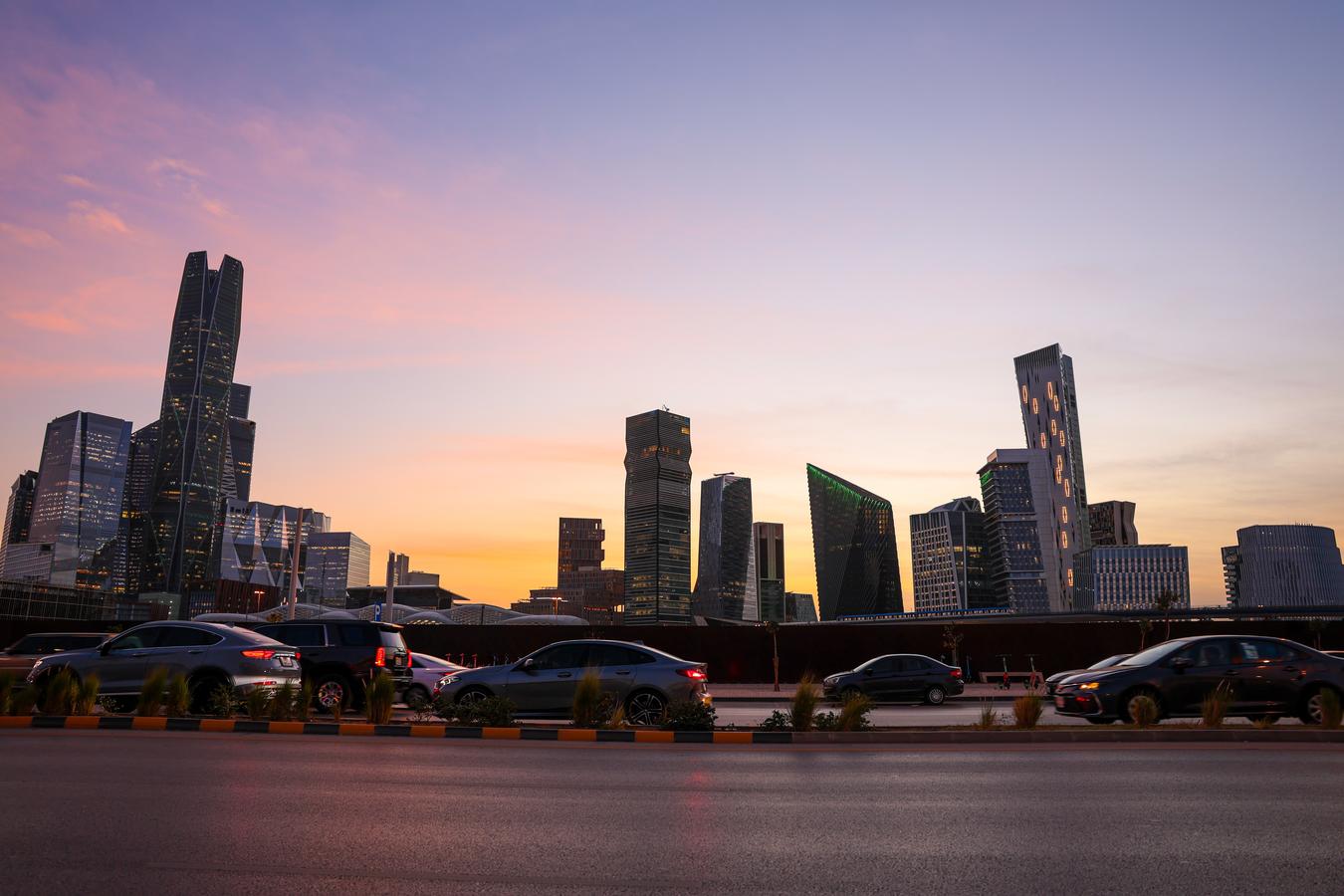
When King Khalid International Airport in Riyadh reportedly re-opened on Sunday after the attacks which authorities have said killed 13 and wounded more than 300, it didn’t quite feel like a return to the kind of normality to which Saudis have become accustomed.
Meanwhile, the UK government’s Foreign, Commonwealth & Development Office advised over this weekend that all but essential travel to Saudi Arabia should be avoided - although given most airlines have suspended operations anyway, it made little tangible difference for now.
The difference, though, is in the lack of certainties people both in Saudi and wanting to come home will be feeling this weekend. After all, Saudi society has endured attacks before (and there are lessons in its response I want to explore). But its ability to adapt should not obscure what it is losing. It’s telling, for me, that the October 10 attack on King Khalid International Airport brought the regional war into a place built for departures, arrivals and reunions.
I’ve been told about a young man who finally reached Riyadh by flying to Dammam and completing the journey by road this week - a 4 hour, 420km journey across the desert.
I know a mother in Riyadh who desperately wants to visit her son in the United Kingdom but now finds herself unable to travel. He couldn’t really come back home even if he wanted to, either. I myself have done this exact trip countless times to see my children and know that my own sense of absence was lessened by the knowledge they were “only” a seven hour flight away. The thought of not being able to make that journey would have been so painful. As it is, many of you may know that I am constantly moving between Saudi and Europe and the uncertainty - and fear - is, for me, very real.
While I am travelling now but that uncertainty is why I really empathise with another woman I know who told me about sleepless nights caused by security alerts in Riyadh and other Saudi cities. These alerts can come at any hour, and I have to say they rarely appear in military briefings. But they show what war does to daily life.
For the people I speak to in Jeddah and Riyadh, work and daily routines continue. So do prayer, worry, anger and fear. Actually the uncertainty about travel began before the latest escalation; the attacks have just made that anxiety worse.
What angers many Saudis is that people in the Kingdom and the wider Gulf are bearing the cost of decisions they did not make, in a war they did not choose. They fear its consequences, especially in the long term. Those I hear from trust that their governments are doing their best. Even so, they worry about the future.
The present war began with American and Israeli strikes on Iran on February 28. Iran responded with attacks on Israel and neighbouring Gulf countries. Washington can conduct a war across oceans and continents. But the people actually living in this region cannot put that distance between themselves and its consequences.
This does not make every regional conflict the same, or even, now, mean that every Houthi operation follows an Iranian order. Saudi Arabia’s involvement in Yemen has its own history, of which as Saudis we are more than aware.
But none of this seems to have much, if any, regard for civilian safety. Iran’s confrontation with America offers no justification for attacking neighbouring populations to exert pressure. Nor should American decisions treat disruption in the Gulf as a minor side-effect.
All of which takes me back to when Saudi society has faced danger before. Its history offers more than a reassuring account of people’s ability to cope. It shows that decisions made during a crisis can shape daily life long after the danger has passed.
In 1979, Juhayman al-Otaybi’s militants seized the Grand Mosque in Makkah. The insurgents were Sunni religious radicals, not an Iranian force. Their defeat ended the occupation, but the consequences reached well beyond the mosque. The siege did not create Saudi conservatism. It did, however, help strengthen a response in which restoring security went alongside tighter rules governing social life. The attack had ended but its effects rippled for decades to come.
And I remember all too well the fear that hung over Jeddah in 1991 when Iraqi Scud missiles struck Saudi and American military and urban installations in Riyadh, Dhahran, and Khobar. We were far from attacks but the accounts of people like Ali al-Harbi, a father in Dhahran, who sent his wife and five children away after trying to shelter them in the basement, were all we could think about.
That was why we sought out gas masks, stocked provisions and moved away from exposed areas. Television explained protective measures and families had to turn official advice into decisions about their children, homes and travel.
It’s this human distress behind the country’s outward stability which can become so important. A family’s departure from the city did not necessarily mean losing hope or confidence. It may have simply been the most sensible way to protect themselves.
And if we are talking historical trauma, we must also mention al-Qaeda’s bombings of residential neighbourhoods in 2003, which initially killed 39 and forced the country to confront a different threat.
“Frankly speaking, we are tired of them,” Khaled al-Maeena, then editor of Arab News, told Salon after the May attacks. His frustration was directed at extremists and those claiming religious authority for their ideas.
Public rejection also spread within conservative Islamist circles, intensifying when the November 2003 bombing of the Muhayya compound in Riyadh, and images of those killed and further turned opinion against the militants.
Society’s response helped strengthen security. The militants lost sympathy and legitimacy. Questioning extremist ideas circulating within Saudi Arabia helped the country defend itself. People could stand together while still asking difficult questions.
Today’s threats are, of course, to a very different way of life in Saudi. Famously, women drive, there are more entertainment options, and economic reform has encouraged wider participation and closer international connections. Work, studies and family lives depend on being able to travel and make plans they can keep.
Which is why the current disruption feels particularly painful. An airport connects parents with children, students with universities and workers with opportunities. When travel becomes uncertain, people lose more than the cost of a booking. They become less sure about when they will see their families or whether they can meet their commitments.
In a recent Arabic-language discussion on the Saudi-focused Reddit community r/SaudiForSaudis, a traveller asked, “تحسون امان؟”—“Do you think it’s safe?” The trip was already paid for and was non-refundable. Anonymous posts cannot tell us how a whole country feels. But this question shows someone trying to make an ordinary decision in uncertain circumstances.
Another commenter, discussing the casualties, wrote: “ارواح الناس اهم من مبدأ الفوز والخساره”—“People’s lives matter more than winning or losing.”
That principle matters in both foreign policy and the handling of emergencies at home. Those ordering attacks are responsible for the harm they cause. Protecting the public also involves explaining risks clearly, making timely decisions and helping people manage disruption. Reassurance means more when people know what to do and where to turn for help. Trust in those responsible for their safety is an important source of confidence.
Daily life has to continue. People have jobs, children and obligations that cannot wait until the region is peaceful. Their determination deserves respect. But carrying on does not mean the burden is lightened, or that people are willing to bear it indefinitely.
The people I hear from are angry at the attackers. They are also getting on with their days. Both reactions are understandable. Prayer offers comfort, and practical adjustments keep life moving. People just wish those adjustments weren’t necessary.
So yes, a young man can reach Riyadh through Dammam. A mother can postpone a visit to her son. On paper, these may look like manageable changes to travel plans. When they happen repeatedly, though, people begin to hesitate before making plans at all.
And, of course, we must also remember the families and friends of the four Saudis, two Bangadeshis, and Americans, Jordanians, Palestinians, Syrians, Sudanese and Egyptians who went to King Khalid International Airport on October 10 and never came home.
Saudi society has shown it can cope with uncertainty. But, if Riyadh Airport does begin to open up this week, let’s hope it’s in an environment where stability can return, along with airlines, flights and, most importantly, people.







 Sep 24, 2026

0 Comments
No comments yet. Be the first to comment!