 Jun 15, 2026
 Comments
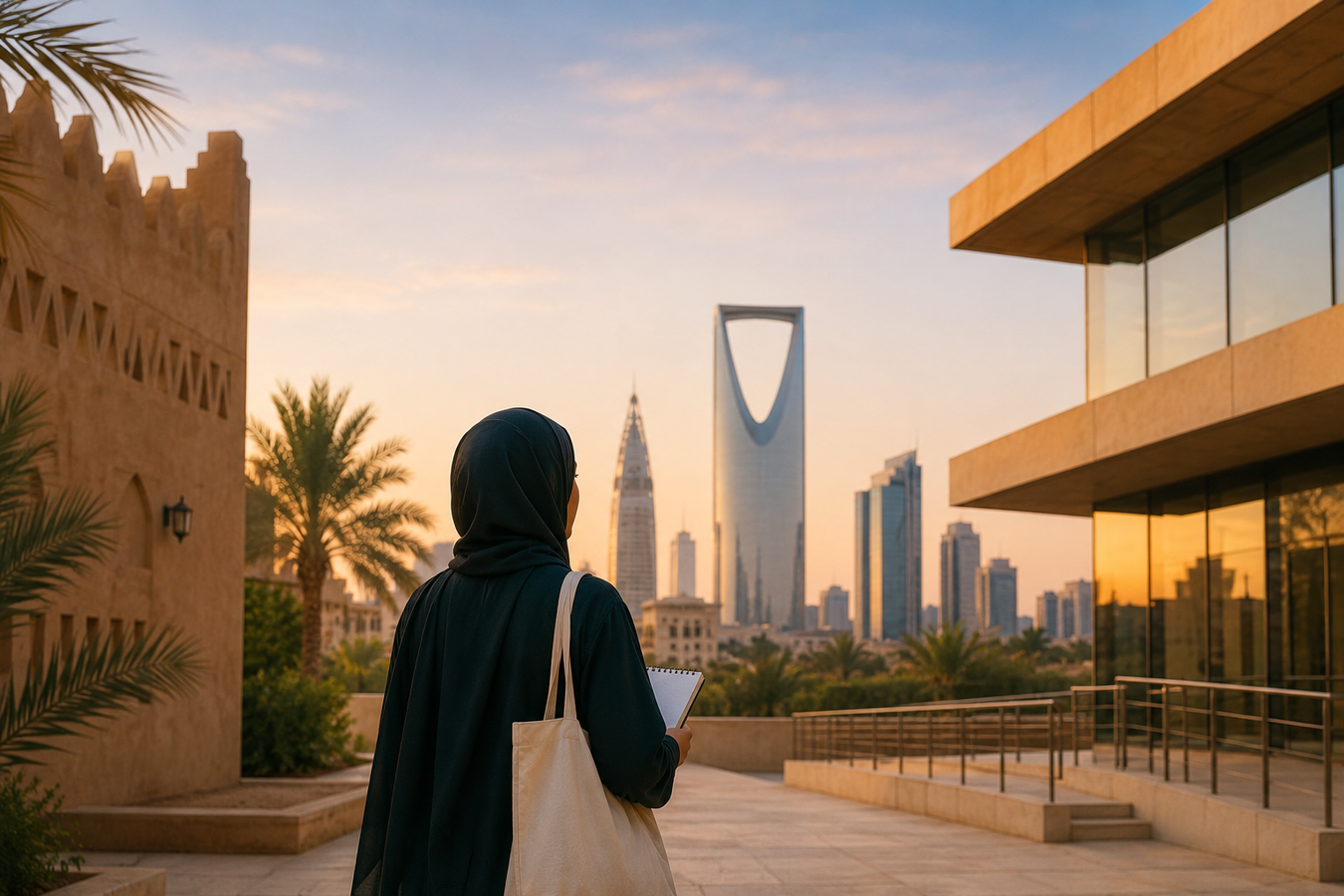
When the Riyadh University of Arts announced its first eight academic programmes to start in September, they probably didn’t anticipate the controversy they would cause. Not in the course content in its colleges of Music, Film, Theater and Performing Arts, and Cultural Management across Riyadh. They were central to the Kingdom’s Vision 2030 effort to build a competitive creative economy - as Minister of Culture Prince Badr bin Abdullah Al Saud put it, Riyadh University of Arts is “an extraordinary step in advancing Saudi Arabia’s cultural sector”.
No, the issue - the backlash even - was in the decision to teach parts of the programme in English; in fact, as the RUA website puts it, English language requirements and proficiencies vary by degree level.
Saudi literary critic Saad AlBazai described the move as “a disaster” (“كارثة”), arguing that teaching artistic disciplines in English risks reproducing intellectual dependency on Western frameworks. Drawing on Kenyan writer Ngũgĩ wa Thiong'o and his theory of “decolonising the mind,” Al-Bazai suggested that language is never culturally neutral. He warned that teaching the arts primarily through English could lead students to “read their heritage through Western eyes,” ultimately producing “hybrid art lacking cultural depth.”
In the end, a spokesperson for the Riyadh University of Arts, Abdulmajid Al-Assaf, clarified last week that the university offers its programs and courses in Arabic and English depending on the specialisation, stressing that academic programs are not separate from national identity as they include knowledge content that promotes Saudi culture, along with courses focused on the Arabic language, creative expression, and cultural communication.
Still, the wider debate about cultural identity, arts education, and modernization in Saudi Arabia had bubbled to the surface again. At first glance, the controversy may appear to be another predictable culture-war argument between conservatives and modernizers. But the intensity of the reaction revealed something far more important for Saudi society: Saudi Arabia’s cultural transformation is entering a new and more psychologically sensitive phase.
The debate is no longer about whether Saudi Arabia should modernize. In many ways, that question has already been settled. The real question now is: in whose language, aesthetics, and social imagination will modernization be expressed?
Supporters of English-language arts education argue that English is increasingly unavoidable in global creative industries. Contemporary art, film, design, and cultural management operate through international academic and professional networks where English dominates much of the discourse.
Yet the backlash has continued because language, in this context, is symbolic rather than merely practical, reflecting a broader anxiety that rapid modernization may gradually detach cultural production from its linguistic and social roots.
The concern is understandable. Art is not engineering. It is inseparable from memory, metaphor, humor, poetry, and collective experience. Many Saudis fear that English-language arts education could unconsciously privilege external standards of legitimacy over local ones.
At the same time, defenders of the university argue that such stances reflect insecurity rather than confidence. Saudi actor and commentator Nasser Al-Qasabi, best known for his satirical series Tash-ma-Tash criticized what he called “identity phobia” (“فوبيا الهوية”), writing that he saw “no objection to using any language to teach the arts.” Saudi students, he argued, would not suddenly become “identity-less beings” simply by studying in English.
Meanwhile, prominent Saudi cultural theorists adopted a more nuanced position. Speaking publicly on the controversy, Abdullah Al-Ghadhami, one of the most influential literary and cultural critics in the Arab world, known for introducing modern literary criticism and “cultural criticism” into Saudi intellectual life, noted that several university programs are already offered in Arabic and stated that “I have no objection if some are in English,” describing multilingual education as a form of “cognitive wealth” (“ثراء معرفي”).
Societies secure in their identity rarely experience multilingualism as existentially threatening. But when modernization feels socially elite or externally validated, language becomes emotionally charged. In Saudi Arabia, English fluency is often associated with privilege, private education, global mobility, and cosmopolitan access. The fear, whether articulated directly or not, is that the Kingdom’s emerging creative class could become socially detached from the broader society it claims to represent.
This is why the Riyadh University of Arts controversy has resonated so strongly. Saudi Arabia’s transformation under Vision 2030 is no longer experienced only through infrastructure, tourism, or economic reform. It is increasingly experienced through questions of language, aesthetics, belonging, and symbolic ownership over identity itself.
The challenge facing Riyadh University of Arts is therefore not choosing between Arabic authenticity and international openness. It is whether Saudi Arabia can build cultural institutions capable of engaging globally without subconsciously treating foreign frameworks as inherently superior.
The reforms introduced under Vision 2030 have brought profound and, in many cases, necessary changes to Saudi society. But rapid transformation also carries psychological weight. Many Saudis are still negotiating how to balance global openness with cultural rootedness, ambition with stability, and international competitiveness with social continuity.
That is what makes this debate significant. It is not simply about English or Arabic. It is about how a society adapts to profound transformation while preserving coherence, confidence, and cultural continuity.







 Sep 24, 2026
0 Comments
No comments yet. Be the first to comment!