 Jun 16, 2026
 Comments
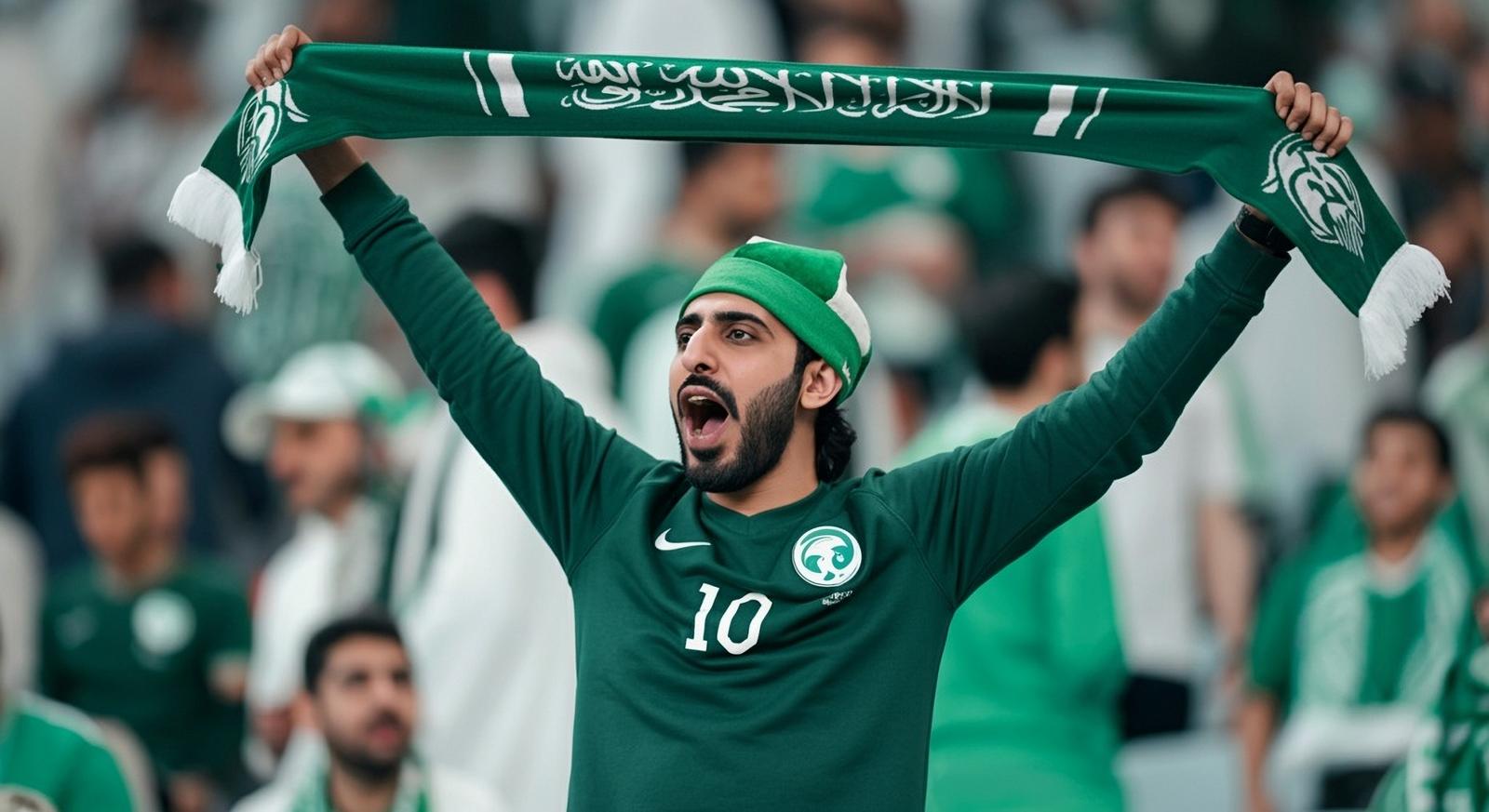
As Saudi Arabia invests heavily in football and prepares to host the 2034 FIFA World Cup, concerns over player development, professionalism and the impact of foreign stars are becoming harder to ignore. These concerns are particularly striking given Saudi Arabia's long-standing World Cup pedigree. The Green Falcons have qualified for the FIFA World Cup seven times, first appearing in 1994 and reaching the Round of 16 in their debut tournament, which remains the national team's best performance on football's biggest stage.
For the first time in many years, Saudi football commentators appear noticeably less optimistic about the prospects of the Saudi national team. Discussions on popular Saudi sports programmes such as Fi Al-Maramah annd Action Ma's Waleed on Al Arabiyah and MBC,have increasingly focused on concerns surrounding the Green Falcons ahead of the 2026 FIFA World Cup. The change in tone is striking given Saudi Arabia's unprecedented investment in football, the rapid growth of the Saudi Pro League and the Kingdom's preparations to host the 2034 FIFA World Cup.
One remark in particular stood out. Reflecting the cautious mood, a commentator observed that supporters now simply hope the Saudi national team can leave the tournament's first round with its dignity intact and avoid any major disasters. The sentiment itself was revealing. It was less a statement of ambition than an acknowledgement of lowered expectations.
What makes the current debate particularly noteworthy is that such openly pessimistic commentary would have been far less common in the past. Saudi football programmes have traditionally been critical of coaches, tactics and federation decisions, but criticism was usually accompanied by confidence that the Green Falcons could rise to the occasion. Today, however, some commentators appear more concerned with limiting the damage than dreaming of a breakthrough at the World Cup.
Football remains by far the most popular sport in Saudi Arabia. It is played, watched and debated across the Kingdom. The recent growth of women's football, including the establishment of professional clubs and a national team, has broadened the sport's appeal and attracted new audiences. Yet despite this expansion, many Saudis remain dissatisfied with the performance and development of the men's national team.
One recurring topic in the Saudi media is the growing number of foreign players in the Saudi Pro League. Critics argue that while the influx of international talent has improved the league's quality, competitiveness and global profile, it may also be limiting opportunities for Saudi players to develop. Former Sports Minister Prince Abdullah bin Musaad has articulated a concern shared by many Saudi football observers, arguing that the drive to build a stronger league risks coming at the expense of the national team if domestic player development does not keep pace. Others point to deeper structural issues. As the chief executive of NEOM's football project recently remarked, some Saudi players still struggle with professional discipline, including maintaining proper diets, fitness routines and sleeping habits.
What is striking is that this criticism is not new. Similar concerns were raised more than three decades ago. In an interview with Arab News, the Serbian coach Dimitri Davidović reflected on his years in Saudi football and noted that concerns about discipline, professionalism and player mentality were already being discussed in the 1990s. Coaches have come and gone, yet the underlying criticisms appear remarkably unchanged. For many Saudi fans, this is perhaps the most frustrating aspect of the debate. The country has transformed dramatically, football infrastructure has improved beyond recognition, and investment in the game has reached unprecedented levels. Yet some of the complaints being heard today are almost identical to those voiced a generation ago.
The issue has become one of the central themes of discussion surrounding Saudi football development. Commentators increasingly question whether the rapid internationalisation of the Saudi Pro League has come at the expense of domestic talent development. Others argue that the challenge is cultural rather than structural, pointing to the need for greater professionalism, discipline and accountability among players.
This explains why many Saudi fans are frustrated. Expectations have risen alongside Saudi Arabia's investment in sport and its preparations to host the 2034 FIFA World Cup. Supporters expect not only better facilities and bigger stars, but also a higher level of professionalism from domestic players. As Saudi Arabia prepares for another World Cup campaign, many believe that talent alone is no longer enough. They want to see a national team that reflects the ambitions of a country investing heavily in becoming a global football power.
The contrast is striking. Saudi football has never enjoyed greater financial resources, international visibility or political support. Stadiums are fuller, television audiences are larger and the Saudi Pro League attracts some of the biggest names in world football. Yet at the very moment the domestic game is flourishing, confidence in the Saudi national team appears unusually fragile.
That is why the current mood among Saudi football commentators is so noteworthy. In previous World Cup cycles, criticism was often accompanied by hope. Today, hope itself appears more restrained. The discussion is less about how far Saudi Arabia can go in the tournament and more about whether it can perform respectably on football's biggest stage.
The debate surrounding the Saudi national team is ultimately part of a larger Vision 2030 story. In many ways, the discussion surrounding the Green Falcons mirrors wider conversations taking place across Saudi society about performance, professionalism and whether ambitious investments are translating into sustainable long-term success. Saudi Arabia has succeeded in transforming its football infrastructure, attracting global stars and elevating the profile of the Saudi Pro League. The next challenge is ensuring that these investments also strengthen the Green Falcons. For many Saudi fans, success will not be measured only by the arrival of international players, world-class coaches or major tournaments, but by whether the national team can compete consistently at the highest level.
For a country that has made sport a pillar of its national transformation, this debate goes far beyond football. It raises a broader question: can the extraordinary investment that has transformed Saudi football's institutions, clubs and infrastructure also produce the cultural and professional changes needed to elevate the national team? The answer will matter not only for the 2026 FIFA World Cup, but also for the Kingdom's ambitions as host of the 2034 FIFA World Cup.
Perhaps that is why the unusually sombre tone on Saudi television feels significant. It is not merely criticism of a team. It is an expression of concern that despite unprecedented resources and attention, the Saudi national team has yet to match the scale of Saudi Arabia's wider sporting ambitions. Whether these concerns prove justified will become clear on the pitch. But for now, the debate itself is revealing. For arguably the first time in decades, many Saudi commentators seem to be asking not how far the Green Falcons can go, but whether they are truly keeping pace with the country's wider football revolution.






 Sep 24, 2026
0 Comments
No comments yet. Be the first to comment!